
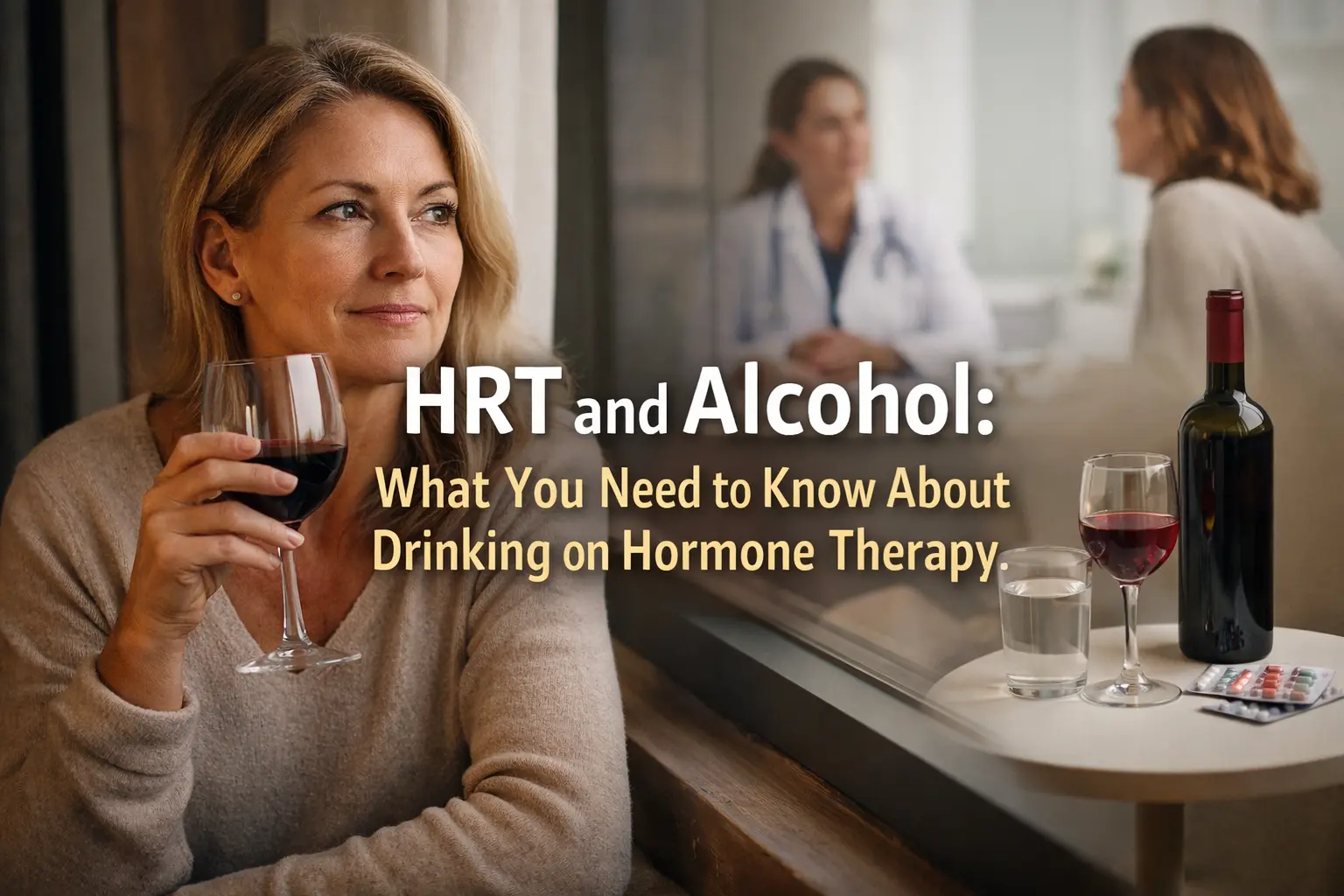
Yes.
Most people can drink alcohol while on hormone replacement therapy (HRT) in moderation.
Light to moderate drinking is usually safe for many individuals, but heavy drinking can increase side effects and long-term risks.
Your response to alcohol can depend on your hormone type, dose, health history, and lifestyle.
How Alcohol Affects Hormone Therapy
Alcohol doesn’t cancel out HRT, but it can influence how hormones behave in the body.
Liver Metabolism and Hormone Processing
Your liver processes both alcohol and hormones.
When you drink, the liver prioritizes breaking down alcohol first.
This may temporarily affect how estrogen, progesterone, or testosterone are metabolized, especially with oral HRT.
Estrogen and Testosterone Changes
Alcohol may raise circulating estrogen levels in some individuals.
This can increase symptoms like breast tenderness, bloating, and fluid retention.
For those on testosterone therapy, heavy alcohol use may lower testosterone production and affect results.
Cortisol, Sleep, and Recovery
Alcohol often disrupts sleep quality.
Poor sleep increases cortisol (stress hormone), which can worsen fatigue, mood swings, and weight gain.
Inflammation and Metabolism
Alcohol may increase inflammation and affect blood sugar regulation.
Over time, this can make weight management and symptom control more difficult while on HRT.
Is It Safe to Drink Alcohol on HRT?
For many people, moderate drinking is safe while on HRT.
Moderate drinking generally means:
- Up to one drink per day for women
- Up to two drinks per day for men
However, individual factors matter.
You may need to limit alcohol if you:
- Have hormone-sensitive conditions
- Experience strong HRT side effects
- Have liver disease
- Notice symptoms worsen after drinking
How Alcohol Affects HRT at Different Intake Levels
| Intake Level | Possible Effects on HRT |
| Occasional (1–2 drinks/week) | Minimal impact for most people |
| Moderate (several drinks/week) | May worsen sleep, hot flashes, and mood |
| Heavy (daily or binge drinking) | Hormone fluctuations, higher long-term risks |
Risks of Mixing HRT and Alcohol
Let’s take a look at some of the risks of mixing HRT with alcohol:
Breast Cancer Risk
Studies show alcohol and estrogen together may increase breast cancer risk more than either alone.
Risk increases with frequent or heavy drinking.
Cardiovascular Effects
Both alcohol and HRT influence blood pressure and circulation.
Heavy alcohol use increases cardiovascular risks.
Worsening Side Effects
Alcohol may intensify:
- Headaches
- Flushing
- Breast tenderness
- Mood changes
- Bloating
Can Alcohol Make HRT Less Effective?
It can.
Alcohol may interfere with some benefits of HRT by affecting sleep, metabolism, inflammation, and hormone balance.
For example:
- Poor sleep may reduce improvements in energy and mood
- Weight gain may counter metabolic benefits
- Hormone fluctuations may cause inconsistent symptom relief
Many people notice more stable results when they reduce alcohol intake.
Does Alcohol Raise Estrogen Levels?
In some cases, yes.
Alcohol may increase circulating estrogen levels by affecting liver metabolism and hormone clearance.
This can worsen symptoms like breast tenderness or bloating in some individuals on estrogen therapy.
Alcohol and Menopause Symptoms
Alcohol may worsen several menopause-related symptoms.
- Hot Flashes: Alcohol can dilate blood vessels, which may trigger flushing and hot flashes.
- Sleep Disturbances: Even small amounts can disrupt deep sleep and increase fatigue.
- Anxiety and Mood Changes: Alcohol affects neurotransmitters and may increase next-day anxiety in some individuals.
HRT Type Matters
Let’s take a look at how different types of HRT can interact with alcohol:
Oral HRT
Oral estrogen is processed through the liver first, so alcohol may have a stronger interaction.
Patches and Gels
Transdermal HRT bypasses the liver initially, so alcohol typically has less direct impact.
Pellets
Hormone pellets release steadily over time.
Alcohol won’t stop their effect but may worsen symptoms.
Testosterone Therapy
Heavy alcohol use may reduce testosterone levels and slow treatment progress.
SEE WHICH HRT OPTION IS RIGHT FOR YOU
Who Should Limit Alcohol Most on HRT?
You may need to be more cautious if you:
- Are in perimenopause
- Have migraines triggered by alcohol
- Have higher BMI
- Have liver concerns
- Use higher-dose hormone therapy
- Notice symptom flare-ups after drinking
Best Alcohol Choices While on HRT
If you choose to drink:
- Stick to smaller portions
- Choose lower-sugar options
- Avoid drinking close to bedtime
Better choices often include:
- Dry wine
- Spirits with soda water
- Light beer
Worst Alcohol Choices While on HRT
Some drinks may worsen symptoms more:
- Sugary cocktails
- Sweet wines
- Heavy beers
These may increase inflammation, blood sugar spikes, and hot flashes.
Symptoms Alcohol May Worsen on HRT
| Symptom | Why It Happens |
| Hot flashes | Blood vessel dilation |
| Sleep issues | REM disruption |
| Mood swings | Neurotransmitter shifts |
| Bloating | Fluid retention |
When You Should Avoid Alcohol Completely
Avoid alcohol if:
- You’re starting HRT and monitoring side effects
- You have liver disease
- Alcohol consistently worsens symptoms
- Your provider recommends avoiding it
Tips for Drinking Safely on HRT
If you choose to drink:
- Stay hydrated
- Eat beforehand
- Track symptoms afterward
- Avoid late-night drinking
Small adjustments often improve how you feel.
Final Verdict: Should You Drink on HRT?
You can usually drink alcohol while on HRT, but moderation and awareness matter.
Everyone responds differently depending on hormone type, health history, and lifestyle.
If alcohol worsens your symptoms or slows your progress, reducing intake often helps.
If you’re considering hormone therapy or want help optimizing your results, the team at Elive Health & Wellness in New Braunfels, TX can help you create a personalized plan based on your needs.
FAQs: HRT and Alcohol
Does alcohol make HRT less effective?
Alcohol doesn’t stop HRT from working, but it can reduce some of its benefits. Drinking may disrupt sleep, increase inflammation, and affect hormone metabolism, which can make symptom relief less consistent for some people.
What are the first signs of low estrogen?
Common early signs include hot flashes, night sweats, vaginal dryness, mood changes, and fatigue. These symptoms often improve once HRT is properly adjusted.
What are the symptoms of low estrogen?
Low estrogen can cause a range of physical and emotional symptoms. Common signs include hot flashes, night sweats, vaginal dryness, low libido, mood changes, fatigue, sleep problems, brain fog, and irregular or missed periods. Over time, low estrogen may also contribute to bone loss and joint discomfort.
Can you have alcohol on TRT?
Yes, you can usually drink alcohol while on testosterone replacement therapy (TRT), but moderation is important. Excessive alcohol intake may interfere with hormone balance, reduce TRT effectiveness, and worsen side effects like fatigue, mood changes, and poor sleep. Light to moderate drinking is generally considered safe for most people, but it’s best to follow your provider’s guidance.

Led by Christa Elza, Elive Health & Aesthetics discovers the hidden and underlying causes of your condition using functional medicine. We are doctors, nurses, and specialists all working collaboratively to provide comprehensive care tailored to each patient.