
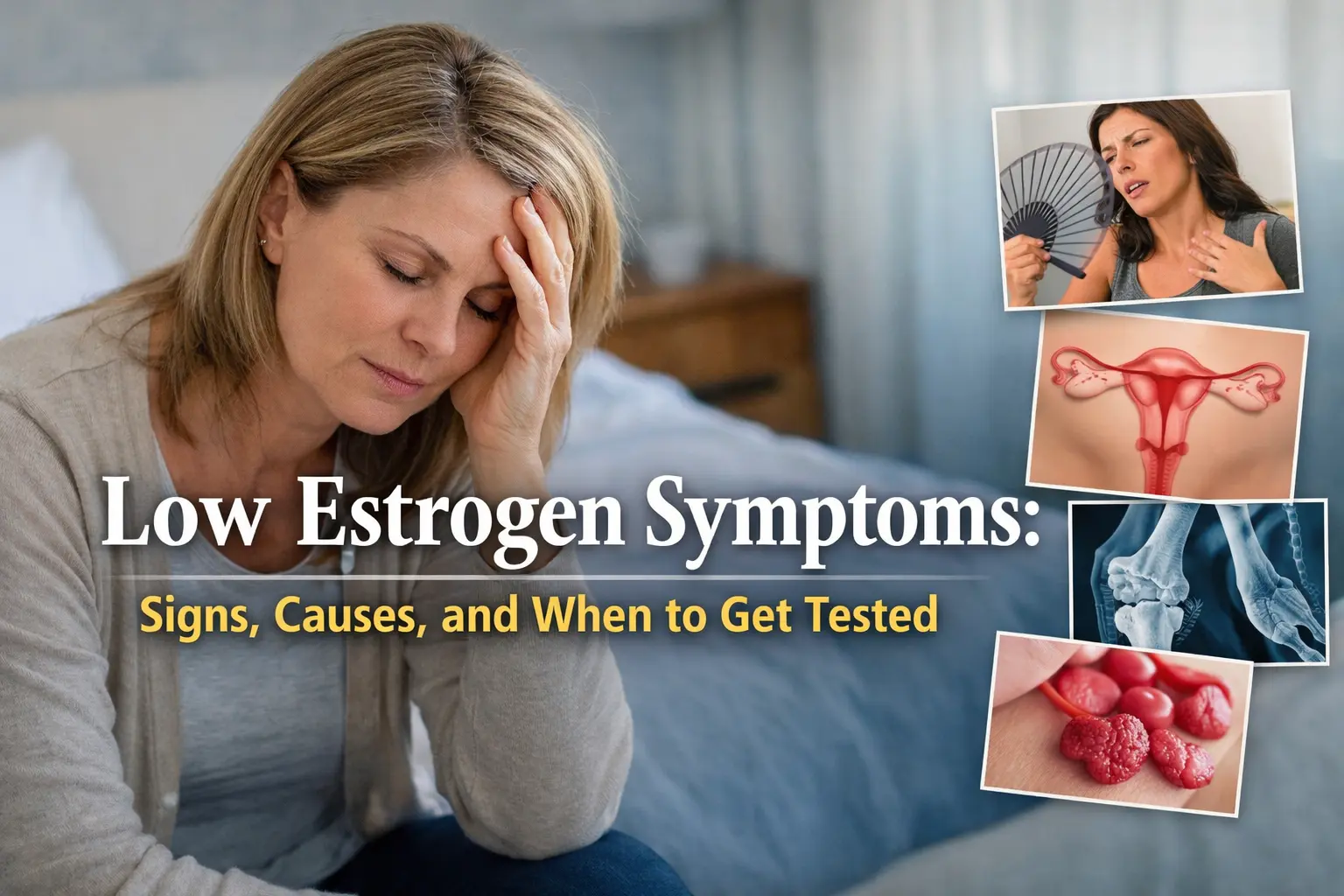
Estrogen plays a major role in women’s health.
It helps regulate the menstrual cycle, supports bone strength, influences mood, and keeps skin and reproductive tissues healthy.
When estrogen levels drop too low, the body can begin to show a variety of symptoms that affect both physical and emotional health.
Low estrogen can happen at different stages of life.
It is common during perimenopause and menopause, but it can also affect younger women due to medical conditions, lifestyle factors, or hormonal imbalances.
Understanding the signs of low estrogen can help you recognize when something may be off and when it may be time to talk with a healthcare provider about hormone therapy.
What Are the Symptoms of Low Estrogen?
Low estrogen symptoms can affect many systems in the body.
Because estrogen plays a role in reproductive health, brain function, metabolism, and bone strength, a drop in this hormone can lead to a wide range of changes.
Common symptoms of low estrogen include:
- Irregular or missed periods
- Hot flashes
- Night sweats
- Vaginal dryness
- Low libido
- Mood swings
- Brain fog
- Fatigue
- Sleep disturbances
- Dry skin
- Headaches
- Breast tenderness
- Weight gain
- Thinning hair
- Joint pain
- Difficulty concentrating
- Reduced breast fullness
- Increased abdominal fat
- Pain during intercourse
- Frequent urinary tract infections
These symptoms may develop gradually and can vary depending on age, overall health, and the underlying cause of the hormone imbalance.
What Is Estrogen and Why It Matters
Estrogen is a group of hormones that regulate many processes in the body.
It is primarily produced in the ovaries, although smaller amounts are also made by fat tissue and the adrenal glands.
Estrogen helps control several important functions, including:
- Menstrual cycle regulation
- Bone density and strength
- Brain function and mood regulation
- Skin elasticity and hydration
- Vaginal and reproductive health
- Cholesterol balance and heart health
When estrogen levels drop, these systems may begin to change, which is why low estrogen symptoms can affect multiple areas of the body.
Early Signs of Low Estrogen
Many women begin noticing subtle hormonal changes before more obvious symptoms appear.
Early signs of low estrogen may include:
- Changes in menstrual cycle length
- Difficulty concentrating
- Increased irritability or anxiety
- Reduced energy levels
- Trouble sleeping
- Mild vaginal dryness
- Headaches
- Reduced sex drive
Because these symptoms can overlap with other conditions or stress-related issues, they are sometimes overlooked.
However, if they persist or worsen, they may indicate a hormone imbalance.
Low Estrogen Symptoms by Body System
Estrogen influences many systems in the body.
When levels are low, symptoms may appear in several different areas of health.
| Body System | Possible Low Estrogen Symptoms |
| Reproductive health | Irregular periods, vaginal dryness, low libido, pain during intercourse |
| Brain and mood | Mood swings, anxiety, depression, brain fog, difficulty concentrating |
| Sleep | Insomnia, night sweats, difficulty staying asleep |
| Skin and hair | Dry skin, thinning hair, reduced skin elasticity |
| Metabolism and energy | Fatigue, slower metabolism, weight gain |
| Bones and joints | Joint pain, reduced bone density, increased risk of osteoporosis |
Because estrogen supports many systems in the body, symptoms may appear in multiple areas at the same time.
Brain and Mood Symptoms
Estrogen interacts with brain chemicals such as serotonin and dopamine, which influence mood, focus, and emotional stability.
When estrogen levels decline, some women experience:
- Mood swings
- Increased anxiety
- Depression
- Brain fog
- Difficulty concentrating
- Memory changes
Some people describe feeling mentally slower or having trouble focusing when estrogen levels are low.
Reproductive and Sexual Health Symptoms
Estrogen helps maintain vaginal tissue health and supports the menstrual cycle.
Low levels can affect reproductive function and sexual wellness.
Possible symptoms include:
- Irregular or missed periods
- Vaginal dryness
- Pain during intercourse
- Reduced libido
- Changes in fertility
These symptoms are particularly common during perimenopause and menopause but may also occur earlier in life.
Skin and Hair Changes
Estrogen contributes to collagen production and helps maintain skin hydration.
When levels decline, visible changes in the skin and hair may occur.
Symptoms may include:
- Dry skin
- Increased wrinkles
- Thinning hair
- Brittle nails
These changes can happen gradually and may sometimes be mistaken for normal aging.
Bone and Joint Symptoms
Estrogen plays an important role in maintaining bone density and protecting joint health.
Low estrogen levels may lead to:
- Joint stiffness
- Joint pain
- Reduced bone density
- Increased risk of osteoporosis over time
Because bone loss can occur silently, monitoring hormone health may help reduce long-term risks.
Metabolism and Energy Changes
Hormones influence metabolism and energy production.
When estrogen levels decline, some women notice changes in weight, stamina, and overall energy.
Possible symptoms include:
- Persistent fatigue
- Slower metabolism
- Weight gain, particularly around the abdomen
- Reduced exercise tolerance
Sleep disturbances related to hormone changes can also contribute to fatigue.
Low Estrogen Symptoms by Age
Low estrogen can occur at different stages of life, and symptoms may vary depending on age.
Low Estrogen in Younger Women
Women under 40 may experience low estrogen due to conditions such as:
- Primary ovarian insufficiency
- Eating disorders
- Excessive exercise
- Chronic stress
- Certain medical treatments
Symptoms in younger women may include irregular periods, fatigue, mood changes, and difficulty conceiving.
Low Estrogen During Perimenopause
Perimenopause is the transitional stage before menopause when hormone levels begin to fluctuate.
Common symptoms during this stage include:
- Hot flashes
- Night sweats
- Irregular periods
- Mood changes
- Sleep disturbances
- Brain fog
Hormone levels may fluctuate significantly during this time, causing symptoms to appear and disappear.
Low Estrogen After Menopause
After menopause, estrogen levels decline significantly.
Symptoms may include:
- Vaginal dryness
- Reduced bone density
- Skin thinning
- Increased risk of osteoporosis
- Reduced libido
Maintaining hormone balance after menopause can play an important role in overall health.
Common Causes of Low Estrogen
Low estrogen can develop for several reasons.
Some of the most common causes include:
- Natural aging and menopause
- Perimenopause hormone fluctuations
- Primary ovarian insufficiency
- Eating disorders or very low body fat
- Intense athletic training
- Thyroid disorders
- Certain medications or cancer treatments
- Chronic stress
Because hormone levels are influenced by many factors, identifying the underlying cause often requires medical evaluation.
How Do You Know If Your Estrogen Is Low?
The only way to confirm low estrogen is through medical testing, but certain symptoms may suggest a hormone imbalance.
Healthcare providers typically evaluate:
- Symptoms and medical history
- Blood tests that measure estrogen levels
- Additional hormone tests such as FSH and LH
- Thyroid function testing when appropriate
Because hormone levels fluctuate during the menstrual cycle, the timing of testing may sometimes affect results.
Long-Term Effects of Low Estrogen
If estrogen levels remain low for extended periods, several long-term health effects may develop.
| Body System | Possible Long-Term Effects |
| Bone health | Reduced bone density and increased risk of osteoporosis |
| Heart health | Changes in cholesterol levels and increased cardiovascular risk |
| Skin health | Loss of collagen and increased skin thinning |
| Cognitive function | Memory challenges and difficulty concentrating |
Recognizing symptoms early and addressing hormone imbalances may help support long-term health.
When to See a Doctor
You may want to speak with a healthcare provider if you experience symptoms such as:
- Persistent fatigue
- Irregular or missed periods
- Ongoing mood changes
- Sleep disturbances
- Hot flashes or night sweats
- Vaginal dryness or discomfort
- Difficulty concentrating
Hormone imbalances can often be identified through testing and addressed with personalized care.
How Elive Health & Wellness Can Help
If you are experiencing symptoms of low estrogen, getting a professional evaluation can help determine the underlying cause and the best course of action.
At Elive Health & Wellness in Texas, providers take a personalized approach to hormone health.
By evaluating symptoms, lifestyle factors, and hormone levels, they can help develop a plan designed to support hormonal balance and overall wellness.
Addressing hormone imbalances early may help improve energy levels, mood stability, sleep quality, and overall quality of life.
FAQs: Low Estrogen Symptoms
How do you treat low estrogen levels?
Treatment for low estrogen depends on the underlying cause and severity of symptoms. Options may include hormone therapy, lifestyle changes, improving nutrition, managing stress, and addressing underlying health conditions. A healthcare provider can evaluate hormone levels and recommend the most appropriate treatment plan.
How to naturally increase estrogen?
Some lifestyle habits may help support healthy estrogen levels. These can include maintaining a balanced diet, getting enough healthy fats, managing stress, exercising moderately, and getting adequate sleep. Foods that contain plant compounds called phytoestrogens may also support hormone balance in some people.
How can I tell if my estrogen is low?
Signs of low estrogen may include irregular periods, hot flashes, night sweats, vaginal dryness, mood swings, fatigue, brain fog, and sleep disturbances. However, the only way to confirm low estrogen levels is through hormone testing ordered by a healthcare provider.
What causes low estrogen besides menopause?
Low estrogen can occur for several reasons besides menopause. Possible causes include primary ovarian insufficiency, excessive exercise, very low body fat, chronic stress, eating disorders, thyroid disorders, certain medications, and medical treatments such as chemotherapy.
What does a woman with low estrogen look like?
Low estrogen does not have one specific appearance, but some physical changes may occur over time. These may include dry skin, thinning hair, reduced breast fullness, and weight changes. Because symptoms vary widely, hormone testing is usually needed to confirm low estrogen levels.
What does a drop in estrogen feel like?
A drop in estrogen can feel different for each person. Some women experience hot flashes, fatigue, mood swings, sleep disturbances, or brain fog. Others may notice changes in their menstrual cycle, vaginal dryness, or reduced energy levels as estrogen levels decline.

Led by Christa Elza, Elive Health & Aesthetics discovers the hidden and underlying causes of your condition using functional medicine. We are doctors, nurses, and specialists all working collaboratively to provide comprehensive care tailored to each patient.