
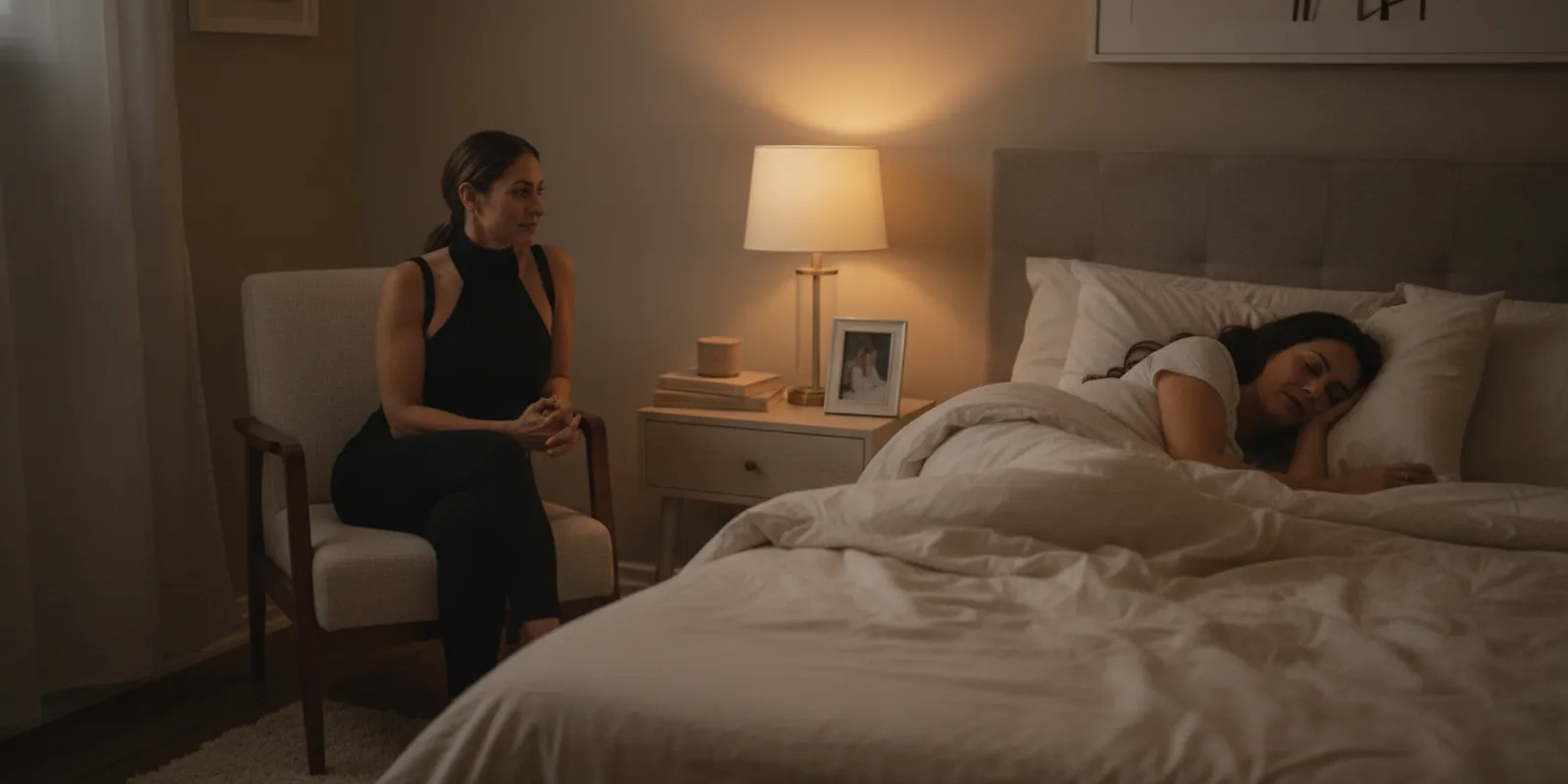
Sleep apnea symptoms can be easy to miss because many occur while you are asleep. Loud snoring, repeated pauses in breathing, gasping, and persistent daytime sleepiness may be clues, but no single symptom confirms sleep apnea. If you or someone close to you has noticed a pattern, it is worth discussing with a qualified clinician rather than trying to diagnose it from a checklist.
Contact Elive Health to discuss your concerns
What is sleep apnea?
Sleep apnea is a sleep-related breathing disorder in which breathing repeatedly becomes reduced or stops during sleep. These events can disrupt sleep, even if a person does not remember waking. A bed partner may notice changes in breathing before the person experiencing them does.
Obstructive sleep apnea (OSA) is the most common form. It occurs when the upper airway becomes partly or fully blocked during sleep. The muscles around the airway relax, and airflow may be restricted. Central sleep apnea is different: breathing pauses occur when the brain’s signals to the muscles that control breathing are disrupted. Some people have features of more than one type. Only a clinical evaluation can determine whether sleep apnea is present and what kind it may be.
People sometimes use “sleep apnea” to mean OSA specifically, but not all sleep-related breathing problems have the same cause. Symptoms can overlap with other sleep, breathing, or health conditions. This is one reason a symptom list can help you decide what to discuss, but cannot replace evaluation.
It is useful to understand the difference between an observed sign and a diagnosis. A pause noticed by a partner is a reason to describe the event to a clinician, not proof of its cause. Likewise, a person who wakes tired may have a sleep-related problem, but that feeling alone cannot identify a breathing disorder. The purpose of an evaluation is to put the history together with appropriate clinical information and decide what, if anything, should happen next.
Which sleep apnea symptoms are commonly noticed at night?
Nighttime signs may be reported by the person sleeping, a partner, or another household member. Common patterns that deserve attention include:
- Loud, ongoing snoring. Snoring can occur without sleep apnea, but regular loud snoring—especially with other signs—is useful information to share.
- Pauses in breathing. Someone nearby may see breathing stop briefly, become shallow, or follow an irregular pattern before restarting.
- Gasping, choking, or snorting. A person may suddenly gasp or make a snorting sound as breathing resumes.
- Restless or interrupted sleep. Repeated movements, frequent awakenings, or a sense of sleeping lightly may occur. A person may not recall each disruption.
- Waking to use the bathroom. Repeated nighttime urination can have many explanations, but it is worth mentioning if it accompanies other possible sleep apnea signs.
- Dry mouth or sore throat in the morning. These can occur for reasons such as mouth breathing, congestion, or room conditions, so they are not specific to apnea on their own.
It can help to ask a bed partner what they have observed, if that conversation feels comfortable. Ask about the pattern, not just whether you snore: Do they notice pauses? Do you gasp? Does this happen often or only during a cold, after alcohol, or in a particular sleeping position? Concrete observations are more useful than a guess about the diagnosis.
Not everyone with sleep apnea snores loudly, and not everyone who snores has sleep apnea. A quiet bedroom observation also cannot rule it out. If you sleep alone, symptoms may still show up as unrefreshing sleep, morning symptoms, or daytime impairment.
When someone describes a nighttime event, details can be more helpful than trying to time or grade it. They might say, “I hear snoring most nights, followed by a pause and a snort,” or “I noticed the pattern only when you were lying on your back.” A family member does not need to decide whether breathing stopped completely or estimate how severe it was. If observations differ between people or nights, share that too. Variability is still useful context.
What symptoms may show up during the day?
Repeated breathing disruption can interfere with restorative sleep. Some people mainly notice its effects during waking hours rather than identifying anything unusual at night. Possible daytime concerns include:
- Excessive sleepiness, nodding off, or difficulty staying alert during routine activities.
- Waking feeling unrefreshed despite allowing what seems like enough time for sleep.
- Difficulty concentrating, remembering details, or keeping attention on a task.
- Irritability, low mood, or changes in patience and motivation.
- Morning headache or a feeling of mental fog.
- Reduced energy that affects work, caregiving, exercise, or social activities.
These experiences are common and have many possible causes. Short sleep, shift work, insomnia, medication effects, stress, mood concerns, pain, and other medical conditions can contribute to fatigue or concentration problems. Daytime sleepiness does not prove sleep apnea, but persistent or safety-relevant sleepiness should not be dismissed as simply being busy.
Pay attention to what the symptom does to your day. For example, note whether you need repeated naps, struggle to stay awake in meetings, or feel drowsy during a commute. This practical impact helps a clinician understand the concern and can point to immediate safety steps while evaluation is arranged.
It may help to describe the difference between tiredness and sleepiness in everyday terms. Tiredness can mean low energy or feeling worn out, while sleepiness can mean having trouble keeping your eyes open or being at risk of nodding off. People may experience both, but the distinction can help clarify what is happening. Give examples rather than choosing a label: “I feel drained after work” is different from “I have to fight sleep during a quiet meeting.”
Consider the timing, too. Is alertness worst soon after waking, after lunch, during a long drive, or throughout the day? Do naps help, and if so, for how long? Are concentration problems present even on days after a longer sleep opportunity? These observations do not diagnose apnea. They help explain the burden of symptoms and may reveal other patterns a clinician should consider.
Why can signs differ from person to person?
Sleep apnea does not look identical in every person. The pattern may vary with the type and severity of breathing disruption, sleep position, other health factors, and whether someone else is present to observe the night. Some people report obvious snoring and gasping; others mainly describe unrefreshing sleep or daytime difficulties. Symptoms can also change over time.
Age, body structure, nasal or throat obstruction, and other health conditions can be relevant to airway function. Body weight can be one risk factor for OSA, but it is not the only one, and people in different body sizes can have sleep apnea. A person’s appearance or weight cannot establish whether they have it.
Alcohol, sedating medicines, and some other substances may affect sleep or breathing in certain circumstances. Do not stop a prescribed medicine or change its timing based on a suspicion of apnea. Instead, tell the prescribing clinician what you take, including nonprescription products and supplements, and ask whether any could contribute to your symptoms.
Some people do not notice waking episodes because they happen briefly or repeatedly throughout the night. Conversely, a person may wake often for a different reason and assume that breathing pauses are occurring. Keeping observations separate from interpretations makes the history more reliable: record what happened, who noticed it, and how often, without labeling it as apnea.
Two people sharing a bedroom may also have different views of the same night. One might hear snoring but sleep through pauses; another may awaken only occasionally. A person sleeping alone may have no witness at all. None of these situations provides a complete record. Treat reports as clues to discuss, not as a test with a pass-or-fail result.
How often do symptoms need to happen before you pay attention?
There is no simple number of noisy nights or tired mornings that can tell you whether a person has sleep apnea. Frequency matters as part of the overall history, but the character of the breathing changes, their persistence, and their effect on waking life matter too. A short-lived change during a respiratory infection, for example, may have a different context from months of habitual snoring with repeated gasping. Neither pattern alone settles the diagnosis.
Consider whether the concern is new, longstanding, intermittent, or becoming more noticeable. Note whether it appears every night or in certain circumstances, such as when sleeping on the back, during allergy seasons, or after a change in routine. These details can guide a conversation, but avoid trying to calculate severity from them. Only appropriate clinical assessment can establish what is happening and whether testing is needed.
Symptoms can also fluctuate while the underlying issue remains. A quieter night or a week with fewer headaches is not proof that a breathing disorder has gone away. Similarly, one especially tired day does not prove apnea. Look at the broader pattern and describe both better and worse periods when you speak with a clinician.
It may be useful to separate three things in your notes: what you or another person observed at night, what you noticed upon waking, and how you functioned during the day. For instance, write “partner heard loud snoring on several nights,” “woke with dry mouth twice,” and “felt drowsy during the afternoon commute.” This avoids turning a collection of clues into a premature conclusion and gives the clinician a clearer starting point.
If you have a diagnosed heart, lung, neurologic, or other chronic condition, include it in the discussion. A clinician may need to consider how existing health issues and medicines relate to sleep and breathing. Do not assume the apnea pathway is the same for everyone, or that a test appropriate for one person is automatically right for another.
For a simple timeline, use a few columns in a notebook or a note-taking app: date, sleep schedule, what someone observed, how you felt on waking, and daytime impact. Keep the entry brief, such as “Tuesday: usual bedtime; partner noticed snoring and one gasp; woke with a dry mouth; sleepy while reading after lunch.” You do not need to write down every movement or wake-up. A concise record over a representative stretch of time is easier to review than a detailed log that becomes hard to maintain.
Try to note context without treating it as a cause. If a symptom happened after a late shift, during a cold, or after a change in medication, record the timing and mention it to the clinician. Do not deliberately change medicine, alcohol use, sleep position, or your schedule to provoke or suppress a symptom. A diary is meant to report ordinary life, not to run an at-home experiment.
Can sleep apnea symptoms look different in women?
Women may report symptoms such as fatigue, insomnia-like sleep disruption, morning headaches, or mood and concentration concerns rather than describing loud snoring as the main issue. Snoring and witnessed breathing pauses can occur too. Symptoms may be attributed to stress, schedule demands, hormonal transitions, or another condition, which can make it harder to recognize a possible sleep disorder. These patterns are not exclusive to women, and they cannot identify the cause by themselves.
When sleep feels persistently unrefreshing, consider describing the full pattern rather than focusing on a single expected sign. Mention nighttime awakenings, daytime sleepiness, snoring if present, and any observations from a partner. If symptoms change around a life stage or alongside other health changes, explain the timing to your clinician, but do not assume one factor accounts for everything.
It can be tempting to explain every change in sleep or energy by a busy period or a hormonal transition. Those contexts may be relevant, but they do not rule out a separate sleep concern. A useful account includes what changed, when it changed, and whether the symptoms continue when other circumstances improve. A clinician can then consider sleep-related and other possible explanations instead of relying on a single assumption.
Are there symptoms that need urgent attention?
Sleep apnea symptoms usually call for a planned medical assessment, not a self-diagnosis. However, some situations need prompt action. If you are struggling to stay awake while driving or operating equipment, do not continue the activity. Stop somewhere safe and arrange another way to travel. Recurrent drowsiness while driving is a safety concern regardless of its cause.
Seek emergency care for severe or sudden breathing difficulty while awake, chest pain, fainting, blue or gray coloring, or another acute emergency. These signs should not be assumed to be sleep apnea. Contact emergency services when appropriate. For repeated nighttime gasping or witnessed pauses without an acute emergency, contact a healthcare professional to discuss timely evaluation.
If a sleeping partner observes an episode that seems prolonged or especially alarming, they should respond based on the person’s immediate condition and seek urgent help if the person is unresponsive or having serious breathing difficulty. A home observation cannot tell the observer exactly what is happening physiologically.
Safety planning can be practical while you arrange care. If sleepiness has made driving feel unsafe, ask someone else to drive, use another transportation option, or delay the trip. If your work involves machinery, heights, or another task where lapses could harm you or someone else, tell the appropriate supervisor or clinician and follow relevant workplace safety procedures. Do not try to solve severe sleepiness with extra caffeine and assume the risk is gone. The cause still needs consideration, and the immediate priority is avoiding a dangerous situation.
When should you talk with a clinician?
Consider making an appointment if someone repeatedly notices pauses, choking, or gasping during your sleep; if loud snoring occurs along with unrefreshing sleep or daytime sleepiness; or if fatigue and impaired alertness persist without a clear explanation. You do not have to wait until every symptom is present. A clinician can review the pattern and decide whether a sleep evaluation is appropriate.
It is especially important to raise the issue when sleepiness affects driving, work that requires sustained attention, or other safety-sensitive activities. Tell the clinician what happens and how often, and describe the consequences. Do not drive when you are too sleepy to do so safely.
If you already receive care for another condition, you can still bring up sleep and breathing concerns. A clinician may consider whether the symptoms relate to sleep apnea, another sleep disorder, medication, a breathing or heart condition, or more than one factor. The next step depends on your individual history and findings.
You can make a visit more focused by stating the reason for it in one sentence: “My partner has noticed breathing pauses, and I have been sleepy during the day,” or “I snore most nights and wake feeling unrefreshed.” Then add the timeline and the most important effect on your daily life. You do not need to arrive with a preferred diagnosis or test in mind. If you have several concerns, lead with the one that feels most urgent and bring a short written list so the other details are not forgotten.
It is reasonable to ask what the clinician thinks should be considered, whether testing is appropriate, and what to do while waiting. If you have already tried a change, describe exactly what you did and what happened. An open conversation allows the clinician to distinguish an observation from an assumption and to explain why a particular next step may or may not fit your situation.
What else can cause similar symptoms?
Snoring, fatigue, headaches, and interrupted sleep are not unique to sleep apnea. Possible contributors include insufficient sleep, insomnia, circadian rhythm disruption, restless legs, nasal congestion, allergies, asthma, reflux, pain, mood disorders, and medication or substance effects. Some people have more than one issue at the same time.
For example, a person who sleeps too few hours because of caregiving or shift work may be tired during the day without having apnea. Another person may have nasal congestion that causes noisy breathing, or may wake repeatedly because of discomfort. Those possibilities do not rule apnea in or out. The context, examination, and, when indicated, a sleep test help guide the assessment.
A useful appointment does not require you to know the cause in advance. Share what you are experiencing and ask what explanations should be considered. Avoid relying on an online quiz, wearable reading, or a partner’s impression as a diagnosis. These may provide clues to discuss, but they do not replace an appropriate evaluation.
Think about the whole sleep opportunity as well as the symptoms. A late bedtime followed by an early alarm, rotating work hours, frequent caregiving interruptions, or a noisy room can limit or fragment sleep. A clinician may ask about these factors because they can contribute to daytime fatigue independently or alongside breathing changes. If your schedule varies, explain both your workday and days off rather than reporting only an average bedtime.
Other concerns may also deserve attention in their own right. For example, persistent pain, restless sensations in the legs, ongoing nasal blockage, or mood changes can affect sleep and daytime function. Mention them even if you suspect apnea is the main issue. A broader history helps avoid treating one possible explanation as the only one and can help identify which concern should be addressed first.
How is sleep apnea evaluated?
An evaluation generally starts with a conversation about symptoms, sleep habits, medical history, medications, and relevant risk factors. A clinician may ask about snoring, observed pauses, gasping, morning symptoms, daytime alertness, and the timing and frequency of concerns. An examination may be part of the assessment. The information helps determine whether testing is needed and what kind may be suitable.
When sleep apnea is suspected, diagnosis usually requires a sleep study. Depending on the person and clinical circumstances, testing may occur in a sleep laboratory or through an appropriate home sleep apnea test. These approaches do not fit every situation and are not interchangeable for everyone. A clinician should explain what a recommended test can assess, how to use it, and what to do if the results do not answer the question.
A consumer sleep tracker or phone app may estimate aspects of sleep, snoring, or oxygen levels, but it is not a substitute for diagnostic testing. A reassuring reading does not necessarily rule out sleep apnea, and an alert does not confirm it. Bring relevant data if you have it, but do not delay assessment or treatment decisions while trying to collect a perfect record.
Results need to be interpreted in context. If a test is negative or inconclusive but symptoms remain concerning, ask the clinician whether another step is appropriate. The right follow-up depends on the original test, the quality of the data, the history, and the possibility of other causes.
An evaluation is not simply a matter of matching a symptom count to a label. The clinician needs to understand whether the story fits a sleep-related breathing concern, whether other explanations are plausible, and whether a particular test can answer the question. A careful history can include sleep timing, observed breathing, medications, health conditions, and the effect of symptoms. If a detail seems unrelated to breathing, it may still matter because several factors can affect sleep at once.
Ask the clinician to explain what a proposed result would mean for your next step. For instance, would a positive result lead to a discussion of treatment options? If the result does not show apnea but your symptoms continue, what would be considered next? Knowing how results will be used can make testing feel less like a pass-or-fail event and more like one part of an assessment.
What questions can you ask about a sleep study?
If a clinician recommends testing, it is reasonable to ask what question the test is meant to answer and why that type of test is suitable for you. Ask whether it will be done at home or in a sleep center, what instructions you need to follow, and whom to contact if the equipment is uncomfortable or does not seem to work. Understanding the plan can make the process less confusing.
For a home test, ask how to place and operate the equipment, whether your usual sleep schedule should be maintained, and how the device should be returned or reviewed. A home test is intended for particular clinical circumstances; it is not the same as a general consumer tracker. If you are worried that the test did not capture a typical night or that a sensor came loose, tell the clinician rather than guessing what the result means.
For an in-lab study, ask what the overnight visit involves, what sensors may be used, whether you can follow your usual evening routine, and what happens if you need help during the night. The purpose is to collect information about sleep and breathing under observation. The clinician or sleep team can explain the specific procedure and what it can and cannot show.
Ask when and how results will be discussed. A device or test may generate data, but a qualified professional needs to interpret it alongside your symptoms and history. If the result does not match what you and your partner have observed, ask what follow-up is reasonable. Sometimes a clinician may consider additional evaluation; that decision depends on the individual case.
Do not try to improve a test result by changing your sleep position, skipping usual medicines, or taking a new product unless the testing team gives those instructions. The aim is to obtain useful information under the plan provided. If you have questions about a prescribed medicine or a chronic condition before testing, contact the clinician rather than making changes on your own.
Before the appointment, consider writing down a few practical questions: “What is the difference between the home test and the lab study for my situation?” “What should I do if I cannot sleep normally with the equipment?” and “Who will explain the result?” You can also ask whether the test should be repeated if the device did not stay in place or the night was unusually disrupted. These are reasonable process questions, not signs that you distrust the recommendation.
If equipment causes discomfort, follow the instructions you were given and contact the testing team for help. Do not improvise by removing a sensor permanently or altering the setup without asking. If you forget an instruction, tell the team honestly when you return the device. Accurate context is more valuable than trying to make the night look ideal.
What information should you prepare before an appointment?
A brief record can help make a visit more focused. For one or two weeks, if practical, note:
- Bedtime, wake time, naps, and whether your schedule changes across workdays and days off.
- How often you wake, whether you feel rested, and when daytime sleepiness is most noticeable.
- Snoring, gasping, pauses, or unusual breathing observed by another person, including how often and when it occurs.
- Morning headaches, dry mouth, or other symptoms and how frequently they occur.
- Medications, supplements, alcohol, or other substances that could be relevant, including when you use them.
- Any effects on concentration, work, driving, exercise, or daily responsibilities.
Ask a partner or household member for observations only if they are comfortable sharing them. A short description is enough; there is no need to record someone sleeping or use a device that intrudes on their privacy. If you have a recording made for your own reference, ask the clinician whether it is useful, but do not treat it as a test result.
Bring a current medication list and information about relevant health conditions. You can write down questions such as: “Could these symptoms be related to sleep apnea?” “Would a sleep study help?” and “What should I do about drowsiness while I wait?” This keeps the visit centered on decisions that affect your care.
Keep your notes factual and manageable. If you do not know how often something happens, say that rather than making an estimate seem precise. If an observation came from another person, identify it as their report. For example, “My partner heard loud snoring on several nights, but is not sure whether there were pauses” is clearer than “I stop breathing every night” when that has not been established.
If you use a wearable or a sleep app, write down the device and what it reported, but do not treat the number as a diagnosis. Bring only data that you can explain and that seems relevant; there is no need to produce a chart. If the device’s result worries you, make that concern explicit and ask how much weight it should carry compared with symptoms and clinical testing.
What happens after a sleep apnea diagnosis?
If testing identifies sleep apnea, the clinician can explain the type and findings, discuss treatment options, and consider factors such as symptoms, health history, and personal circumstances. Recommendations are individualized. Not every option is appropriate for every person, and treatment decisions should be made with a qualified healthcare professional.
For OSA, options may include positive airway pressure devices, oral appliances, positional approaches, or other interventions depending on the clinical picture. Some people may be advised to address contributing factors as part of a broader plan. Central sleep apnea has different mechanisms and may require a different evaluation and treatment approach. This is not a complete list or personal treatment advice.
Follow-up matters. If a treatment is recommended, ask how progress will be assessed, what problems to report, and when to check in. A treatment plan may need adjustment if symptoms continue, equipment is difficult to use, or new concerns arise. Do not abandon a prescribed treatment or modify it without discussing the change with the clinician responsible for your care.
Sleep apnea care can involve a sleep specialist or other clinicians depending on the person’s needs. If you have additional concerns such as persistent fatigue, hormone-related symptoms, or broader wellness questions, a clinician can help determine whether those issues warrant a separate assessment. They should not be used to assume or treat sleep apnea without appropriate evaluation.
It is also reasonable to ask how success will be reviewed. A person may want to know whether follow-up considers symptoms, use of a recommended device, test information, or other health factors. If a plan is hard to follow, mention the specific obstacle: discomfort, schedule, travel, uncertainty about instructions, or a symptom that has not improved. The treating clinician can explain which adjustments are appropriate; a reader should not alter equipment or treatment on their own.
Do not assume that improvement in one symptom means every concern has been resolved. Perhaps a person feels more alert but still has witnessed nighttime breathing changes, or snoring decreases while morning headaches continue. Report both changes and persistent symptoms at follow-up. The care plan can then be reviewed in light of the full pattern rather than a single measure.
Can lifestyle changes help with sleep apnea?
General sleep habits can support rest, but sleep hygiene does not diagnose or cure sleep apnea. A consistent sleep opportunity, a comfortable sleep environment, and a schedule that allows adequate rest may help with sleep quality. These steps are useful for many people, including those whose symptoms have another cause. They should not replace assessment when breathing pauses or significant sleepiness are present.
Depending on the individual, a clinician may discuss factors such as sleep position, alcohol use near bedtime, smoking, nasal symptoms, or weight as part of a broader plan. The significance of each factor varies. Avoid extreme diets, unverified devices, or supplements promoted as a guaranteed apnea fix. Ask about the safety and evidence for any proposed change, particularly if you have another health condition or take medication.
For practical habits around scheduling and the sleep environment, see Elive’s guide to sleep hygiene and sleep routines. Helpful routines can support overall rest, but a person with possible sleep apnea may still need diagnostic testing and condition-specific care.
When considering a change, be clear about the question it can answer. A regular bedtime may help you determine whether insufficient sleep is contributing to fatigue, but it cannot establish whether breathing pauses are occurring. Side sleeping may change how someone snores, but a quieter night does not demonstrate that a disorder has resolved. Treat general habits as supportive measures, not substitutes for evaluation or prescribed care.
Small, realistic steps are more useful than a long list that is hard to keep. You might first protect an adequate time for sleep on most nights, then note whether daytime alertness changes. If nasal congestion is part of your experience, ask a clinician what approaches are suitable instead of assuming a particular product is safe or effective for you. If you are already being evaluated or treated, tell the care team about changes you make so they can interpret the pattern accurately.
What should you know about children and sleep apnea?
Children can also have sleep-related breathing problems, and signs may differ from the adult pattern. A caregiver might notice habitual snoring, noisy or difficult breathing at night, restless sleep, or daytime behavior and attention changes. These signs have other possible explanations, and an adult symptom checklist should not be used to assess a child.
If you are concerned about a child’s breathing during sleep, discuss it with the child’s healthcare professional. Explain what you have observed, how often it occurs, and whether it affects daytime functioning. A clinician can determine whether further assessment is appropriate. Seek urgent help for an acute breathing emergency.
What should you be cautious about when researching symptoms?
Search results often make symptoms sound more definitive than they are. Snoring does not automatically mean apnea. Feeling tired does not identify a single cause. And a person’s risk factors do not prove that they have a sleep disorder. Use symptom information to prepare a clear conversation, not to label yourself or someone else.
Be cautious with products or services that promise to diagnose or eliminate apnea without a proper evaluation. A mouthpiece, nasal strip, app, supplement, or breathing exercise may be marketed with confident language, but a claim is not evidence that it is right for a particular person. Ask a clinician about the intended use, limitations, and risks before relying on a product, especially if breathing pauses or substantial daytime sleepiness are present.
Also be careful not to stop prescribed medication, change a treatment, or use another person’s equipment based on an online post. Sleep and breathing concerns are personal health matters. A professional can help match next steps to your symptoms and medical history.
Be mindful of symptom checkers that present a score as a diagnosis. A questionnaire may help organize concerns, but it cannot capture every relevant part of your history or determine the right testing approach for you. The same caution applies to videos or audio recordings: they may illustrate a sound, but they cannot reliably explain what caused it or how your breathing behaved throughout the night.
It can also help to avoid turning ordinary variation into a daily test. Repeatedly checking a wearable, asking a partner to monitor every breath, or searching for a definitive answer after each bad night can add anxiety without resolving the medical question. Choose a modest way to record the pattern, then bring it to a clinician. If the concern is causing significant worry, mention that too; distress is part of the experience and can be addressed in the conversation.
How can you describe symptoms clearly?
Specific, plain-language descriptions are more helpful than a conclusion. Instead of saying only “I think I have apnea,” explain: “My partner has noticed pauses in my breathing several nights a week,” or “I wake up gasping and feel sleepy most afternoons.” Include when the pattern began, whether it is changing, and what effect it has on your day.
If you sleep alone, say that no one has observed your breathing; that does not make your symptoms less important. Describe your sleep schedule and the symptoms you notice on waking and during the day. If another person has mentioned snoring or unusual breathing in the past, share what they said and how long ago it occurred.
It is also useful to say what you have already tried and whether it changed anything. Keep the distinction clear between an observation and an assumption: “I feel more alert after sleeping on my side” is an observation; “I no longer have apnea” is a conclusion that would require appropriate clinical evidence.
If a bed partner is part of the conversation, agree on a simple way to share observations without creating pressure. One person can describe what they recall in the morning, while the other explains how they felt the next day. Neither has to monitor the night continuously or settle disagreements about what happened. If accounts differ, report both versions and let the clinician decide what additional information is useful.
When a symptom began can be as useful as what it feels like. Mention whether the pattern appeared after a major schedule change, illness, medication change, weight change, or another health concern, while avoiding the assumption that timing proves cause. If symptoms are episodic, describe the circumstances and how long they last. A timeline helps the clinician decide which details deserve follow-up.
How can functional medicine fit into a sleep concern?
A whole-person assessment can consider how sleep interacts with daily routines, stress, nutrition, activity, medications, and other health concerns. That broader perspective may be useful when fatigue has several possible contributors. It does not replace a sleep study when a breathing disorder is suspected, and it should not delay referral or evaluation that is clinically appropriate.
Elive Health & Wellness is an NP-led, consultation-based functional medicine and wellness clinic serving patients in person in New Braunfels, Texas, and virtually when licensure and the services required allow. Its care approach includes review of health history, relevant diagnostic testing when appropriate, individualized planning, and ongoing monitoring. A consultation does not guarantee a particular test, diagnosis, or treatment. Learn more about Elive’s consultation-based approach.
Sleep apnea is a specific medical concern, so an appropriate clinician must determine whether sleep testing or care from a sleep specialist is needed. A wellness conversation may help place sleep concerns in context, but should not be represented as a substitute for apnea diagnosis or treatment.
For a consultation about broader wellness concerns, bring the same practical details you would bring to another health visit: your sleep schedule, symptoms, relevant health history, and medication list. A clinician can consider whether multiple contributors warrant discussion and whether another type of clinician or sleep evaluation is appropriate. The purpose is not to presume that a wellness plan will resolve sleep apnea, but to ensure that your concerns are considered in context and directed to suitable care.
Frequently asked questions about sleep apnea symptoms
Can you have sleep apnea without snoring?
Yes, loud snoring is not present or recognized in every person with sleep apnea. Someone may instead notice unrefreshing sleep, repeated awakenings, morning symptoms, or daytime sleepiness. These signs also have other causes, so talk with a clinician if the pattern is persistent or concerning.
Does waking up tired mean I have sleep apnea?
No. Waking tired can follow insufficient sleep, a disrupted schedule, insomnia, medication effects, pain, stress, and many other issues. If it continues despite an adequate opportunity for sleep, especially alongside observed breathing pauses or gasping, ask a clinician whether further evaluation is appropriate.
Can a smartwatch tell me whether I have sleep apnea?
A consumer wearable may collect information that is useful to discuss, but it cannot by itself confirm or exclude sleep apnea. Do not rely on a single device reading in place of a medical evaluation or prescribed testing. Ask a clinician how to interpret data from a device you already use.
What if my partner notices pauses but I feel fine?
Share the observation with a healthcare professional even if you do not feel sleepy. People may not perceive events that occur during sleep, and absence of a particular daytime symptom does not settle the question. A clinician can decide whether assessment is warranted.
Can symptoms improve on their own?
Some sleep symptoms fluctuate, and a change in snoring or fatigue does not prove that a breathing disorder has resolved. If you have been diagnosed or treated, follow up with the clinician responsible for your care before changing a plan. For new or persistent symptoms, discuss what evaluation makes sense.
If sleep apnea symptoms are affecting your rest or daytime alertness, write down what you have noticed and discuss it with a qualified clinician. An individualized evaluation can help clarify whether sleep apnea or another issue may be contributing and what next steps are appropriate.
Request a conversation with Elive Health
Seek urgent help for severe breathing difficulty or another emergency, and avoid driving whenever sleepiness makes it unsafe.
